Join the New American Revolution over at "The Americans Justice Party!" Learn more →
Restoring America's Supply Chain Sovereignty: An Executive Introduction to the Crisis and the Path Forward!
Restoring America's Supply Chain Sovereignty: An Executive Introduction to the Crisis and the Path Forward Through the Americans.pro Channel
In the landscape of contemporary American economic discourse, few challenges loom as large or carry implications as profound for future generations as the intertwined crises of escalating national debt and the fragility of our supply chain management systems.
As the United States moves through 2026 with federal debt held by the public near or exceeding 100 percent of GDP, the accumulating burdens of interest payments—now consuming hundreds of billions annually—constrained fiscal flexibility, and the crowding out of private investment cast long shadows over commerce, manufacturing, and the entrepreneurial spirit that has long defined our national character.
This is no mere accounting concern; it represents a foundational threat to economic security, prosperity, and the innovative capacity that underpins American exceptionalism. The supply chain management crisis, laid bare by pandemic-era disruptions, intensifying geopolitical tensions, and decades of over-reliance on concentrated foreign sources for critical inputs, demands urgent, strategic, and inspired response.
It is in this moment that we must cultivate a clear understanding of the future state awaiting the next generation—one defined by robust supply chain protection, steadfast defense of domestic industrial capabilities, and rigorous enforcement of resilience standards that together secure economic sovereignty and opportunity for those who follow. The national debt's trajectory imposes real economic costs. Macroeconomic analyses project that continued growth in debt relative to the economy will subtract hundreds of billions from annual GDP in the coming decades, with cumulative effects reaching trillions. Elevated borrowing costs driven by large-scale government debt issuance raise the price of capital for private actors.
Entrepreneurs and manufacturers face higher interest expenses when financing facility expansions, technology upgrades, or inventory buffers essential to resilient operations. This dynamic directly impedes the agility needed to confront supply chain vulnerabilities. Commerce feels the strain through elevated input costs that feed into broader price pressures, reduced margins, and diminished competitiveness against nations with more stable or subsidized supply networks.
Manufacturing has experienced prolonged erosion of domestic capacity, with significant portions of production—particularly in semiconductors, pharmaceuticals, and advanced materials—migrating overseas, creating single points of failure that geopolitical rivals can exploit.
The Entrepreneurial Spirit, historically America's greatest competitive advantage, encounters mounting headwinds: heightened risk perception, tighter credit conditions, complex regulatory overlays from shifting trade policies, and uncertainty that discourages bold investment in physical production or novel logistics solutions. Yet these pressures also crystallize opportunity—the chance to reignite American leadership by rebuilding self-reliant enterprise grounded in innovation and strategic collaboration.
Current supply chain conditions reveal deep structural vulnerabilities. Geopolitical competition and tariff policies have triggered substantial reorientation of trade, with U.S.-China goods flows declining sharply in recent periods as companies accelerate diversification away from concentrated dependencies. Effective tariff rates across categories have climbed to levels not seen in generations, spurring widespread adoption of China+1 sourcing, nearshoring to Mexico and Canada, and selective reshoring to the United States.
Current supply chain conditions reveal deep structural vulnerabilities. Geopolitical competition and tariff policies have triggered substantial reorientation of trade, with U.S.-China goods flows declining sharply in recent periods as companies accelerate diversification away from concentrated dependencies.
This scene portrays a next-generation U.S. seaport where robotic cranes, autonomous vehicles, and AI systems handle massive container volumes with precision and speed. In the coming decades, such automation will slash processing times, cut emissions through electric equipment, and dramatically boost U.S. trade capacity. It will strengthen America’s global competitiveness, create high-skill jobs in technology and maintenance, reduce vulnerability to labor shortages or disruptions, and secure reliable flows of goods that underpin economic growth and national resilience.
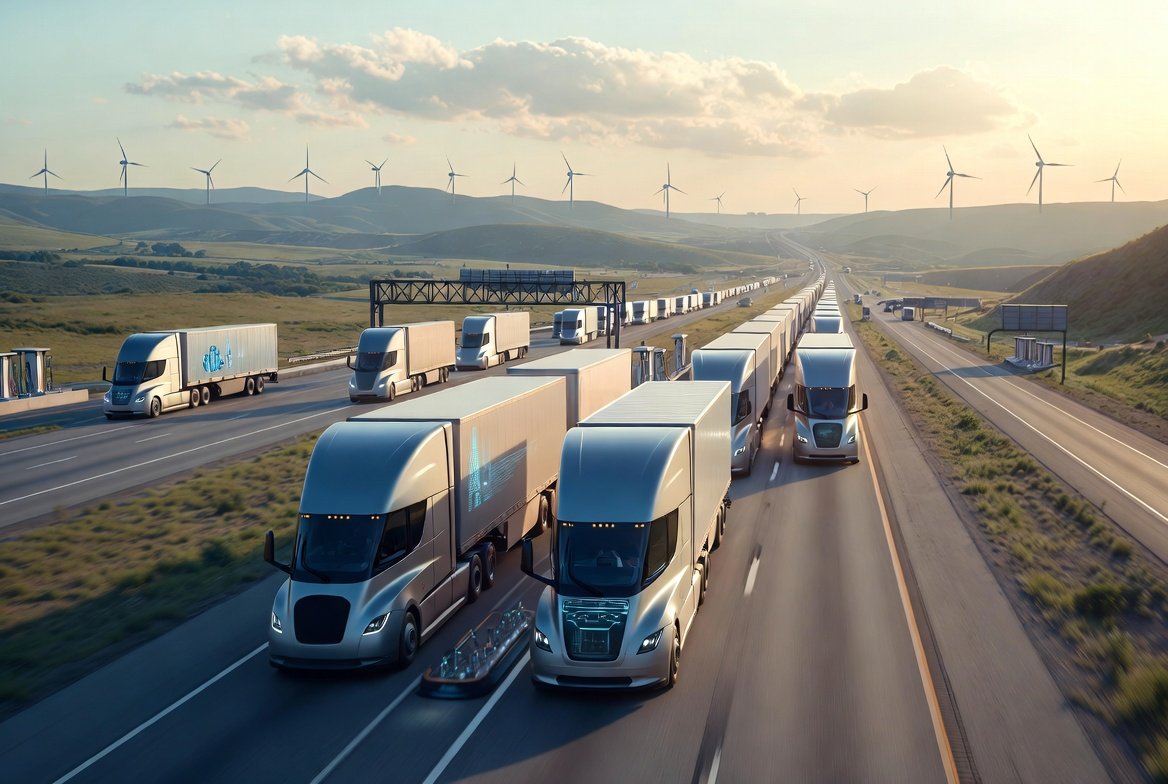
The image captures coordinated fleets of electric autonomous trucks moving goods efficiently across U.S. highways. By 2035 and beyond, widespread platooning and electrification will slash fuel costs and carbon emissions while increasing safety and throughput. This transformation will lower logistics expenses for American businesses, support e-commerce and manufacturing growth, reduce dependence on imported oil, create new jobs in EV infrastructure and fleet management, and position the United States as a leader in clean, resilient domestic transportation commerce.
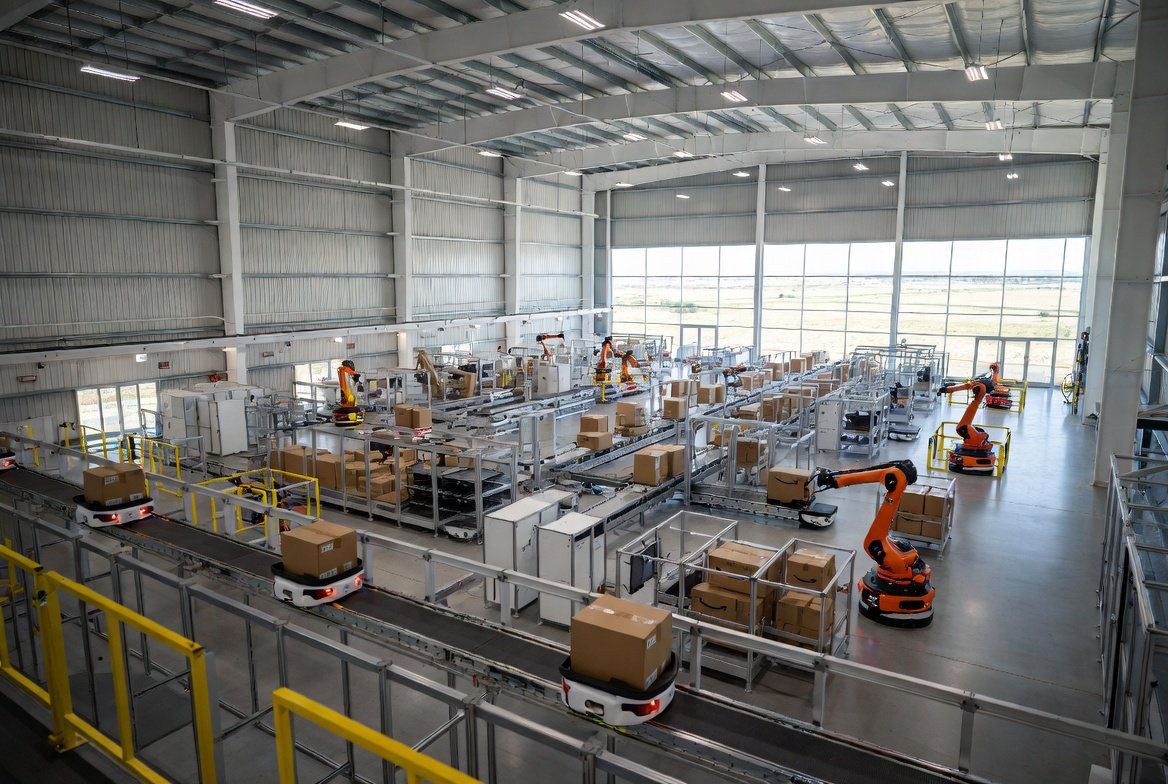
This depiction illustrates vast U.S. warehouses transformed by swarms of robots and AI orchestration. In the future, these centers will handle explosive e-commerce volumes with near-perfect accuracy and 24/7 operation. They will accelerate delivery times for American consumers and businesses, create demand for robotics engineers and data analysts, reduce operational costs, minimize errors and waste, and strengthen the backbone of U.S. retail and manufacturing commerce by enabling faster, more reliable supply responses.
The image shows coordinated drone fleets delivering packages across U.S. communities with precision and speed. Looking ahead, widespread drone adoption for last-mile delivery will revolutionize speed and access, especially in suburban and rural areas. It will expand e-commerce reach, reduce road congestion and emissions from trucks, create new aviation and tech jobs, improve supply reliability during disruptions, and enhance the overall efficiency and convenience of American commerce while maintaining strict safety standards.
This scene visualizes secure, transparent digital ledgers tracking every step of U.S. supply chains in real time. In the coming years, blockchain will eliminate fraud, verify sustainability claims, and provide end-to-end visibility for regulators, businesses, and consumers. It will build greater trust in American products, streamline compliance and trade documentation, reduce disputes and delays, attract premium export markets, and strengthen the integrity and competitiveness of U.S. commerce on the global stage.
The depiction highlights AI systems forecasting demand, risks, and optimal flows across U.S. supply networks. By 2035, predictive and generative AI will cut forecasting errors dramatically, enable proactive rerouting, and simulate countless scenarios instantly. This will minimize costly disruptions, optimize inventory nationwide, lower prices for consumers, boost productivity, create high-value data and AI jobs, and give American companies a decisive edge in agility and cost-efficiency in both domestic and international commerce.
This image portrays modern American factories bringing production back home through advanced automation. In the future, reshoring supported by robotics and AI will reduce reliance on distant overseas suppliers, shorten lead times, and improve quality control. It will generate well-paying domestic jobs, strengthen national security by securing critical supply chains, stimulate regional economies, enhance resilience against global shocks, and position the United States as a premier location for high-value, technology-driven manufacturing commerce.
The depiction shows advanced, low-emission cold chains preserving perishable U.S. goods from farm and factory to consumer. Future investments in electric refrigeration, renewable-powered facilities, and smart monitoring will cut food waste and spoilage dramatically while meeting strict sustainability standards. This will protect American agricultural and biotech exports, ensure food security and safety, lower long-term costs, support rural economies, and demonstrate U.S. leadership in responsible, resilient commerce that feeds the nation and the world.
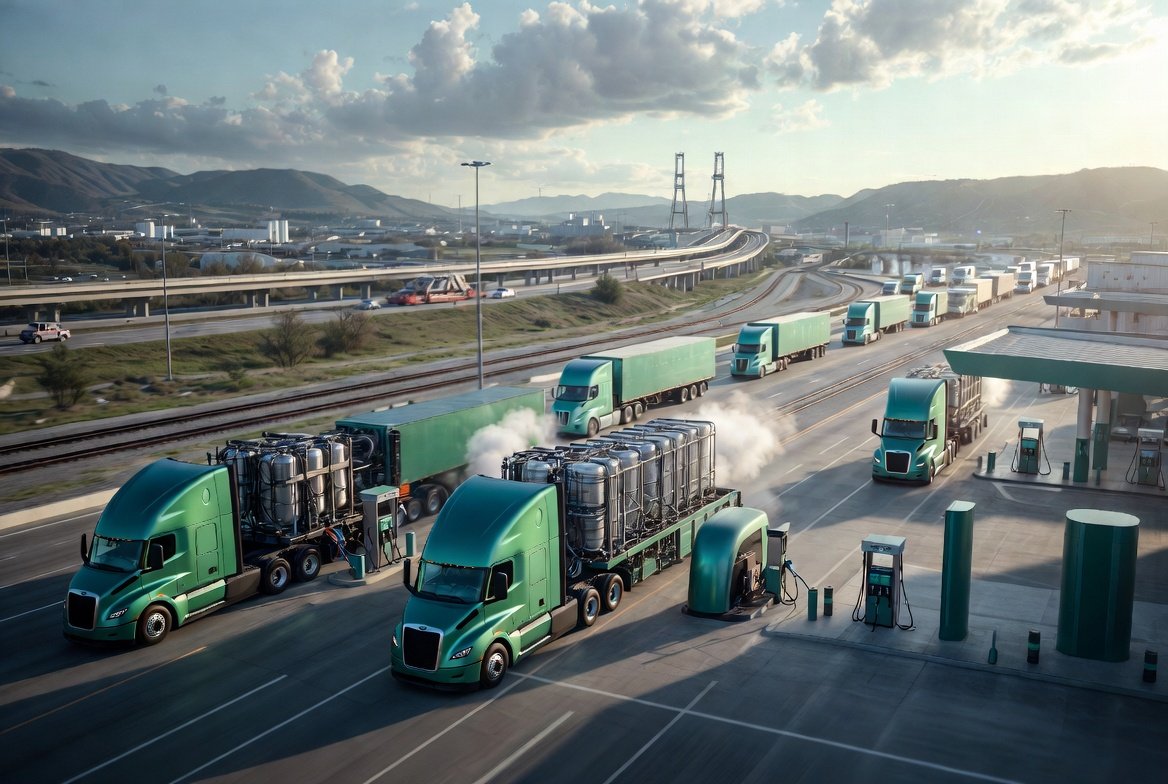
This scene illustrates heavy freight moving on hydrogen fuel cell power across U.S. networks. By the mid-2030s, hydrogen will power long-haul trucks and equipment where batteries are less practical, enabling deep decarbonization of logistics. It will support America’s clean energy transition, create jobs in hydrogen production and infrastructure, reduce air pollution in freight corridors, lower the carbon footprint of commerce, and help U.S. industry meet ambitious climate goals while maintaining global competitiveness.
The image captures distributed 3D printing facilities producing parts on demand across America. In the future, additive manufacturing will slash inventory needs, enable rapid customization and prototyping, and localize production of critical components. It will accelerate innovation cycles for U.S. manufacturers, reduce shipping volumes and lead times, create new skilled jobs in digital design and advanced production, strengthen supply chain resilience, and give American industry a powerful advantage in speed and flexibility.
This depiction shows sophisticated virtual replicas of entire U.S. supply chains used for simulation and optimization. By 2035, digital twins powered by IoT and AI will allow companies and government to test scenarios, predict bottlenecks, and optimize flows in a risk-free virtual environment. This capability will dramatically improve decision-making, reduce real-world disruptions and waste, enhance training, accelerate infrastructure planning, and give the United States unmatched strategic oversight of its commercial arteries.
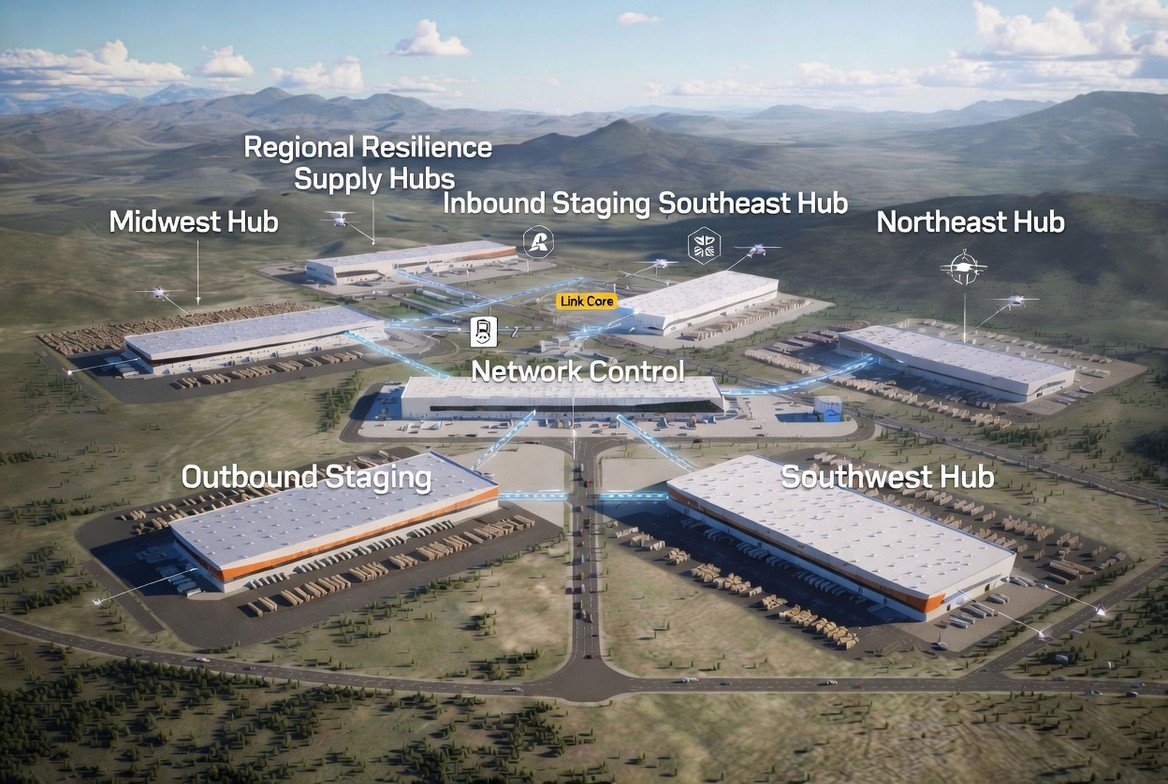
The final scene portrays a network of smart, localized U.S. supply hubs designed for speed and redundancy. In the coming decades, shifting toward regionalized, modular networks will shorten distances, cut transportation costs and emissions, and provide backup capacity during crises. These hubs will boost local economies, create distributed high-tech employment, improve responsiveness to regional demand, strengthen national economic security, and build a more agile, sustainable foundation for long-term American commerce prosperity and stability.
TheAmericans.PRO! HR-driven features enhance supply chain resilience, efficiency, and adaptability by ensuring the right people, skills, and organizational support underpin U.S. commerce operations—from procurement and logistics to distribution and manufacturing:
We would love to help you out with any question you may have. Feel free to ask us anything and everything!